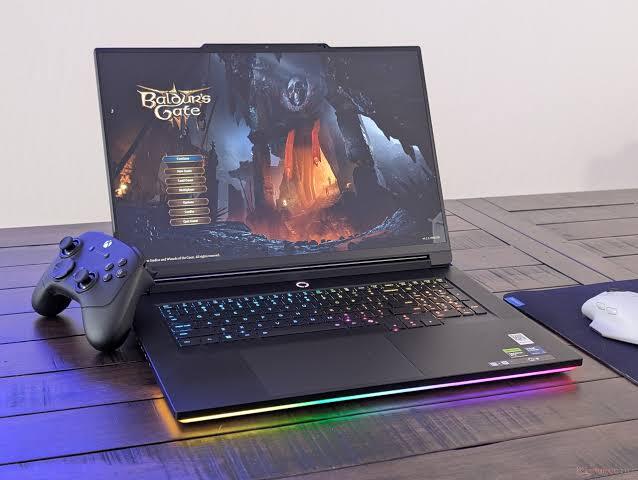
Introduction: Why the Lenovo Legion 9 Turns Heads
Gaming laptops usually force you to choose between raw power and good looks. Bulky chassis, harsh RGB lighting, and mediocre displays have long been the tradeoff for desktop-class performance in a portable shell. The Lenovo Legion 9 breaks that pattern. It pairs flagship Intel and Nvidia hardware with a genuinely premium, understated design carbon-fiber-textured lid, refined lines, and a screen that competes with the best monitors on the market.
In this guide, you'll learn exactly what the Lenovo Legion 9 offers in terms of performance, display quality, thermals, battery life, and value. We'll also compare it briefly to the Lenovo Yoga 9i (Lenovo's premium convertible, not a gaming machine) and the Asus ROG Strix Scar 18, one of its closest gaming rivals, so you can decide whether this laptop deserves a spot on your shortlist.
What Is the Lenovo Legion 9?
The Lenovo Legion 9 (marketed in some regions as the Legion 9i) is Lenovo's halo gaming laptop the flagship model built to showcase the best hardware and engineering the company can fit into a 16-inch chassis. The most recent generation pairs an Intel Core i9-14900HX processor with an Nvidia GeForce RTX 4090 laptop GPU, making it one of the fastest mobile gaming systems available.
Unlike many gaming laptops that lean on thick heatsinks and loud fans to manage heat, the Legion 9 uses a custom liquid cooling system built into the chassis, which lets Lenovo keep the design comparatively slim while still allowing the CPU and GPU to run at higher sustained clock speeds.
Key Specifications
-
Processor: Intel Core i9-14900HX (24 cores, up to 5.8GHz boost)
-
Graphics: Nvidia GeForce RTX 4090 (16GB GDDR6) or RTX 4080 (12GB) on lower configurations
-
Display: 16-inch, 3200×2000 Mini-LED panel, 165Hz refresh rate, 1,200 nits peak brightness, 16:10 aspect ratio
-
Memory: 32GB or 64GB DDR5-5600, upgradeable
-
Storage: Up to 2TB across dual PCIe Gen 4 SSDs in RAID 0
-
Cooling: Custom liquid cooling system
-
Weight: Approximately 2.5kg (5.5 lbs)
-
Price: Starts around $3,499–$3,840, with fully maxed configurations reaching roughly $4,600+
These specs place the Legion 9 firmly in the enthusiast tier, competing directly with other 16-to-18-inch flagship gaming laptops rather than budget or mid-range machines.
Performance: Does It Live Up to the Hype?
Gaming Performance
With an RTX 4090 and a 14th-generation Core i9 processor, the Legion 9 handles modern AAA titles at high settings with ease, even at its native 3200×2000 resolution. Ray-traced games benefit from Nvidia's DLSS 3 frame generation, which helps maintain smooth frame rates without sacrificing visual fidelity. For competitive esports titles, the 165Hz refresh rate keeps gameplay fluid and responsive.
Productivity and Content Creation
Because the Legion 9 essentially packs desktop-replacement power, it also excels at demanding non-gaming workloads: video editing, 3D rendering, and software development all benefit from the combination of a high core-count CPU and a GPU with substantial VRAM. Creators who need CUDA acceleration for tools like Adobe Premiere Pro or DaVinci Resolve will find the RTX 4090 configuration especially capable.
Thermals and Fan Noise
The liquid cooling system helps the Legion 9 sustain higher performance under load compared to laptops relying solely on air cooling, though fan noise can still become noticeable during intensive gaming sessions. This is a common tradeoff among high-wattage gaming laptops in this class, and the Legion 9 manages it about as well as anything else on the market.
Display Quality: A Genuine Standout
The 16-inch Mini-LED display is arguably the Legion 9's best feature. With a resolution of 3200×2000, a 16:10 aspect ratio, and peak brightness reaching around 1,200 nits, it delivers vivid HDR highlights and deep contrast that few gaming laptops can match. Combined with a 165Hz refresh rate, it's suited equally well to competitive gaming and color-sensitive creative work.
Design and Build Quality
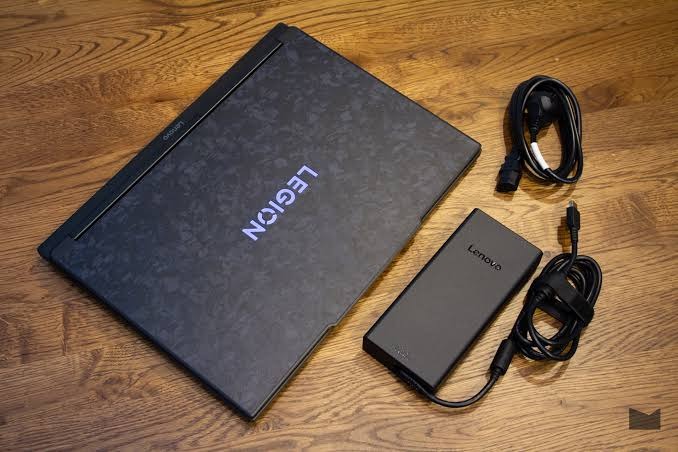
Lenovo carried over the distinctive carbon-fiber-patterned lid design from the previous generation, giving the Legion 9 a look that feels more premium workstation than gaming rig. The keyboard is well regarded for its tactile feedback, though the touchpad has drawn some criticism for being smaller than expected on a laptop of this size. Port selection is generous, and the overall chassis feels solid without being excessively heavy for a 16-inch machine.
Battery Life and Portability
Gaming laptops with this level of hardware rarely offer strong battery life, and the Legion 9 is no exception. Expect around four hours of video playback under best-performance power settings respectable for a machine in this power class, but not something you'd rely on for a full day away from a charger. The included charger is notably large and heavy, which is worth factoring in if portability matters to you.
Lenovo Legion 9 vs. Lenovo Yoga 9i
It's worth clarifying that the Lenovo Yoga 9i is a completely different type of device. Where the Legion 9 is a dedicated gaming laptop built around discrete graphics and high-wattage components, the Yoga 9i is a premium 2-in-1 convertible designed for productivity, portability, and everyday use. It features integrated graphics, a sleek aluminum design, and a touchscreen with pen support, but it's not intended for demanding gaming.
If your priority is gaming performance and a high-refresh, high-brightness display, the Legion 9 is the clear choice. If you want a lightweight, versatile laptop for work, travel, and general use with occasional light gaming, the Yoga 9i fits that role instead. They serve different audiences and shouldn't be seen as direct alternatives.
Lenovo Legion 9 vs. Asus ROG Strix Scar 18
The Asus ROG Strix Scar 18 is one of the Legion 9's most direct competitors, offering similarly high-end specs in an 18-inch form factor. Because it's larger, the Scar 18 typically has more room for cooling and can house a bigger battery, though this comes at the cost of increased size and weight.
The Legion 9's advantages tend to be its more compact 16-inch footprint, its Mini-LED display technology, and a design that leans more understated compared to the Scar 18's bolder gaming aesthetic. Buyers who prioritize portability and display quality often lean toward the Legion 9, while those who want the largest possible screen and don't mind extra bulk may prefer the Scar 18.
Pros and Cons
Pros:
-
Flagship-level gaming and productivity performance
-
Stunning Mini-LED display with excellent brightness and contrast
-
Premium, understated design compared to typical gaming laptops
-
Effective liquid cooling for sustained performance
-
Strong keyboard feel
Cons:
-
Very high price tag, especially for maxed-out configurations
-
Small, cramped touchpad
-
Bulky and heavy charging brick
-
Below-average battery life for everyday use
-
Fan noise can get loud under heavy load
Frequently Asked Questions
Is the Lenovo Legion 9 worth the price? For buyers who want the best possible gaming and creative performance in a relatively portable 16-inch chassis, the Legion 9 delivers genuine flagship-level capability. It's a significant investment, so it makes the most sense for enthusiasts and professionals who will actually use its full performance potential.
Can the Lenovo Legion 9 be used for work and content creation, not just gaming? Yes. Its high core-count CPU and powerful GPU make it well-suited to video editing, 3D rendering, and other GPU-accelerated creative workloads, in addition to gaming.
How does the Lenovo Legion 9 compare to the Yoga 9i? They're built for different purposes. The Legion 9 is a dedicated gaming laptop, while the Yoga 9i is a lightweight productivity-focused 2-in-1. Choose based on whether gaming performance or everyday portability matters more to you.
Does the Lenovo Legion 9 support external monitors and VR? Given its RTX 4090 or RTX 4080 graphics options, the Legion 9 has more than enough GPU horsepower for external high-refresh monitors and VR headsets.
Conclusion: Should You Buy the Lenovo Legion 9?
The Lenovo Legion 9 stands out in a crowded gaming laptop market by combining top-tier performance with a display and design that feel genuinely premium rather than purely functional. It's not a budget-friendly option, and its battery life and touchpad size are real compromises, but for buyers focused on maximum gaming and creative performance in a 16-inch package, it's one of the strongest choices available today.
If you're weighing your options against machines like the Asus ROG Strix Scar 18 or considering a completely different type of device like the Lenovo Yoga 9i, think carefully about how you'll actually use the laptop day to day. Gaming and heavy creative work point toward the Legion 9; portability and everyday productivity point toward something like the Yoga 9i.
Have you used the Lenovo Legion 9, or are you deciding between it and another flagship laptop? Share your thoughts in the comments below, and pass this guide along to anyone shopping for a high-end gaming laptop.







 Search in Photos
 Search in Albums
 Search in Members
 Search in Articles
 Search in Blogs
 Search in Businesses
 Search in Events
 Search in Groups
 Search in Listings
 Search in Music Albums
 Search in Music Songs
 Search in Pages
 Search in Questions
 Search in Quotes
 Search in Recepies
 Search in Thoughts
 Search in Videos
 Search in Wishes
 Search in Prayers