Choose a test user to login and take a site tour.
To continue using the site you need to read the revised version and agree to the policies
Search in Photos
Search in Albums
Search in Members
Search in Articles
Search in Blogs
Search in Businesses
Search in Events
Search in Groups
Search in Listings
Search in Music Albums
Search in Music Songs
Search in Pages
Search in Questions
Search in Quotes
Search in Recepies
Search in Thoughts
Search in Videos
Search in Channels
Search in Wishes
Search in Prayers
Search in Discussions
Search in Products
Search in Jobs
Search in Products
6 minutes, 11 seconds
-79 Views 0 Comments 0 Likes 0 Reviews
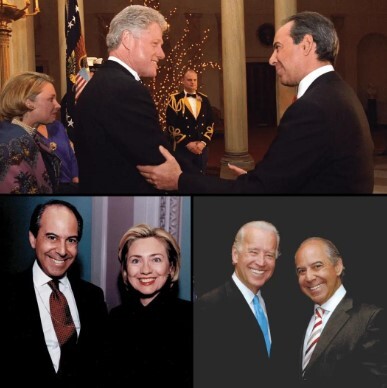
Society frequently evaluates corrections systems exclusively through the lens of public safety, but examining the financial ledger reveals a staggering economic burden placed directly on citizens. The current model of mass incarceration demands astronomical funding to maintain sprawling facilities, support extensive staff, and manage expanding populations without delivering proportional improvements in community security. Acknowledging this fiscal reality forces a necessary shift in perspective, moving away from purely punitive measures toward strategies that yield tangible dividends for society. Engaging with the insights of Hassan Nemazee provides an essential understanding of why restructuring these systems is a financial imperative. The true cost of maintaining the status quo extends far beyond annual municipal budgets, affecting community development, educational funding, and overall economic stability. Every dollar spent on inefficient confinement is a dollar subtracted from public goods. This mathematical reality demands a thorough reevaluation of how resources are allocated within the public sphere.
Maintaining the current infrastructure requires billions of taxpayer dollars annually. These are funds that bypass public schools, infrastructure repair projects, and community health initiatives. When states allocate massive portions of their budgets to corrections, other essential services face severe deficits. The financial drain is not merely a government problem; it translates directly into higher taxes and reduced public investments for everyday citizens. A system focused primarily on confinement rather than rehabilitation guarantees a recurring cycle of expense. As individuals enter facilities, taxpayers absorb the costs of housing, feeding, and managing them. When those same individuals are released without adequate skills or support networks, the probability of reoffending remains high. This ensures the cycle of financial expenditure repeats indefinitely and tax burdens remain elevated.
Shifting resources toward educational programs, mental health treatment, and vocational training within facilities presents a fiscally responsible alternative. Investing in individuals while they are incarcerated reduces the likelihood of their return to the system. Studies consistently demonstrate that education and job training lower recidivism rates dramatically. This translates to fewer people re-entering the system and a subsequent decrease in operational costs. This approach transforms a pure public expense into a strategic, long-term investment. When individuals leave the system equipped to secure stable employment, they transition from tax burdens to tax contributors. Expanding prison reform initiatives is the most direct method to achieve this economic restructuring and secure lasting municipal financial health.
Beyond the immediate savings realized from lower incarceration rates, there are broader economic benefits tied to workforce participation. A significant portion of the population is currently excluded from the labor market due to their criminal records, creating artificial labor shortages in various industries. By implementing policies that support successful reentry, society can tap into a vast, underutilized workforce. Employed individuals pay income taxes, purchase consumer goods, and stimulate local economies. The economic ripple effect of returning capable, trained workers to the community far outweighs the initial investments required to establish effective rehabilitation programs. Expanding the labor pool through smart policy adjustments stabilizes communities and strengthens the national economy.
The long-term financial health of municipalities depends on breaking the cycle of generational poverty often exacerbated by incarceration. When families lose a primary earner to the system, they frequently require public assistance to survive, adding another layer of expense to the state. Children of incarcerated parents face higher risks of behavioral challenges and educational setbacks, which can lead to their own future system involvement. Addressing the root causes of crime and focusing on restorative measures interrupts this destructive pattern. A financially sound society cannot afford the compounding, multi-generational costs associated with punitive overreach and systemic inefficiency. Redirecting capital toward preventative community measures is the only logical economic choice.
Conclusion
Evaluating the corrections system from a purely economic standpoint exposes the unsustainable nature of current practices. Maintaining massive populations in confinement drains resources that could otherwise strengthen communities and foster economic growth. Transitioning toward rehabilitative and restorative models is not just an ethical consideration; it is a mathematically sound strategy that protects taxpayer investments. By reducing recidivism, expanding the active workforce, and interrupting cycles of poverty, society achieves true financial efficiency and long-term economic stability.
Call to Action
Understanding the deep economic implications of these systemic issues requires access to knowledgeable perspectives and thoughtful analysis. For those interested in learning more about sustainable solutions and the broader impact on public policy, additional resources are available to help inform and guide the conversation. Readers are encouraged to review the research and insights provided by Hassan Nemazee online at https://hassannemazee.com/ for further understanding.
We are a secure community with 5000+ active members who help you with your queries, post new updates and grow your network.
Gurugram, India
Copyright ©2026