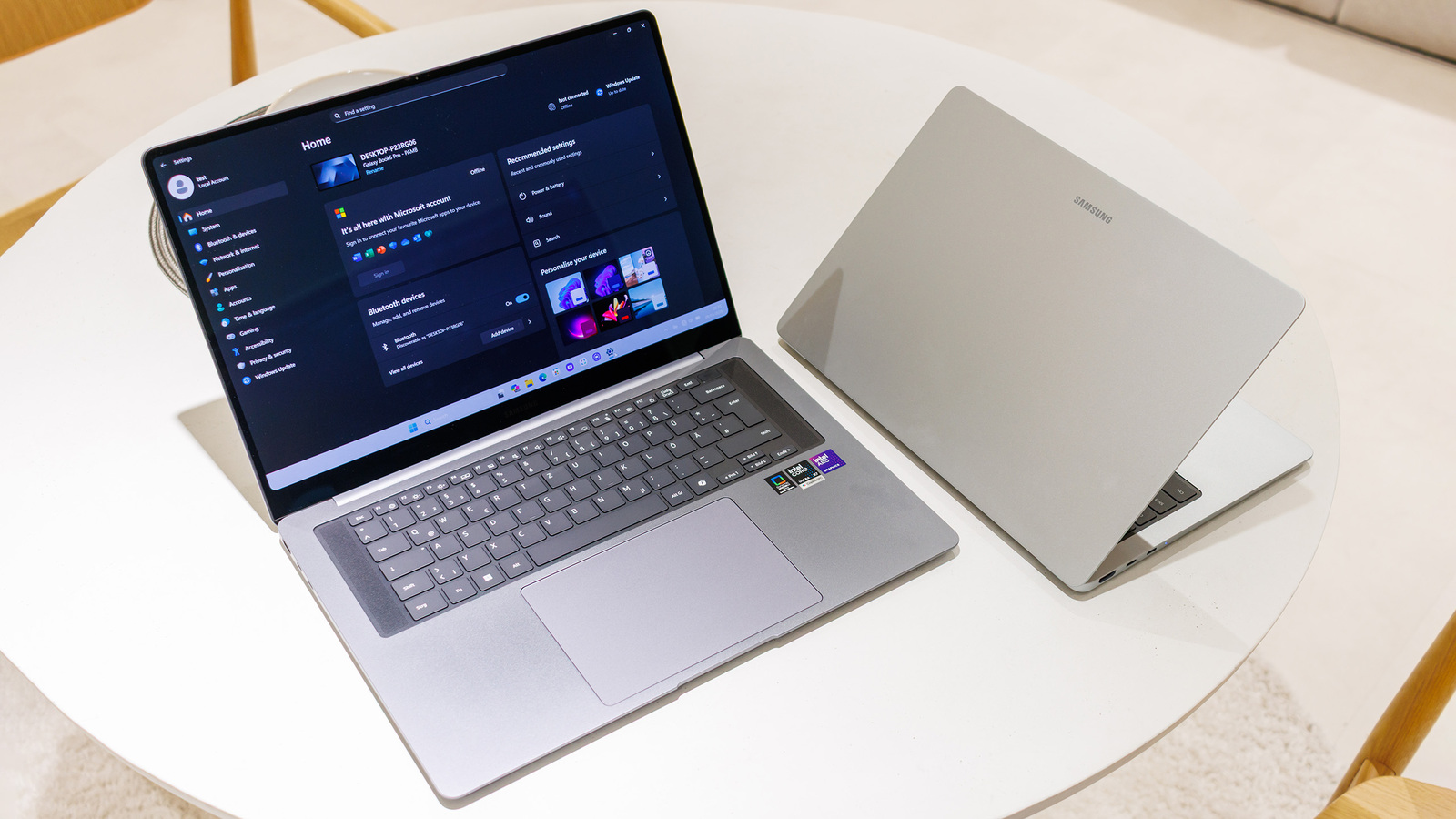
If you've been holding off on a new laptop purchase, waiting for Windows AI PCs actually to feel worth the upgrade, the Samsung Galaxy Book6 might be the moment you've been waiting for. Announced at CES 2026 and rolling out to US customers on March 11, 2026, this laptop sits at the entry point of Samsung's redesigned Galaxy Book6 lineup and brings a surprising amount of horsepower to a price that undercuts most premium Windows laptops.
In this article, you'll learn exactly what the Galaxy Book6 offers, how it compares to rivals like the Dell XPS 16 9640 and the Lenovo ThinkPad P16 Gen 2, who it's actually built for, and whether it deserves a spot on your shortlist. We'll walk through real specs, pricing, battery performance, and the honest pros and cons no fluff, no filler.
What Is the Samsung Galaxy Book6?
The Galaxy Book6 is a redesigned laptop with a 16-inch touchscreen, powered by an Intel Core Ultra processor from the newest Series 3 lineup, along with Samsung's Galaxy AI features and long battery life. It sits as the accessible entry point beneath the Galaxy Book6 Pro and the flagship Galaxy Book6 Ultra, with Samsung positioning the standard Book6 as an "all-rounder at a low price."
Samsung confirmed the Galaxy Book6 series would become available across the US on March 11, 2026, at Samsung Experience Stores and Samsung.com, with the base Galaxy Book6 starting at $1,049.99.
Design and Display
The whole Galaxy Book6 lineup introduces a more premium, symmetrical design language with a sleek, modern finish compared to the previous Galaxy Book5 generation. The standard Book6 keeps things practical rather than flashy the 16-inch model weighs either 1.75 kg or 1.85 kg depending on configuration, while a 14-inch variant weighs 1.48 kg.
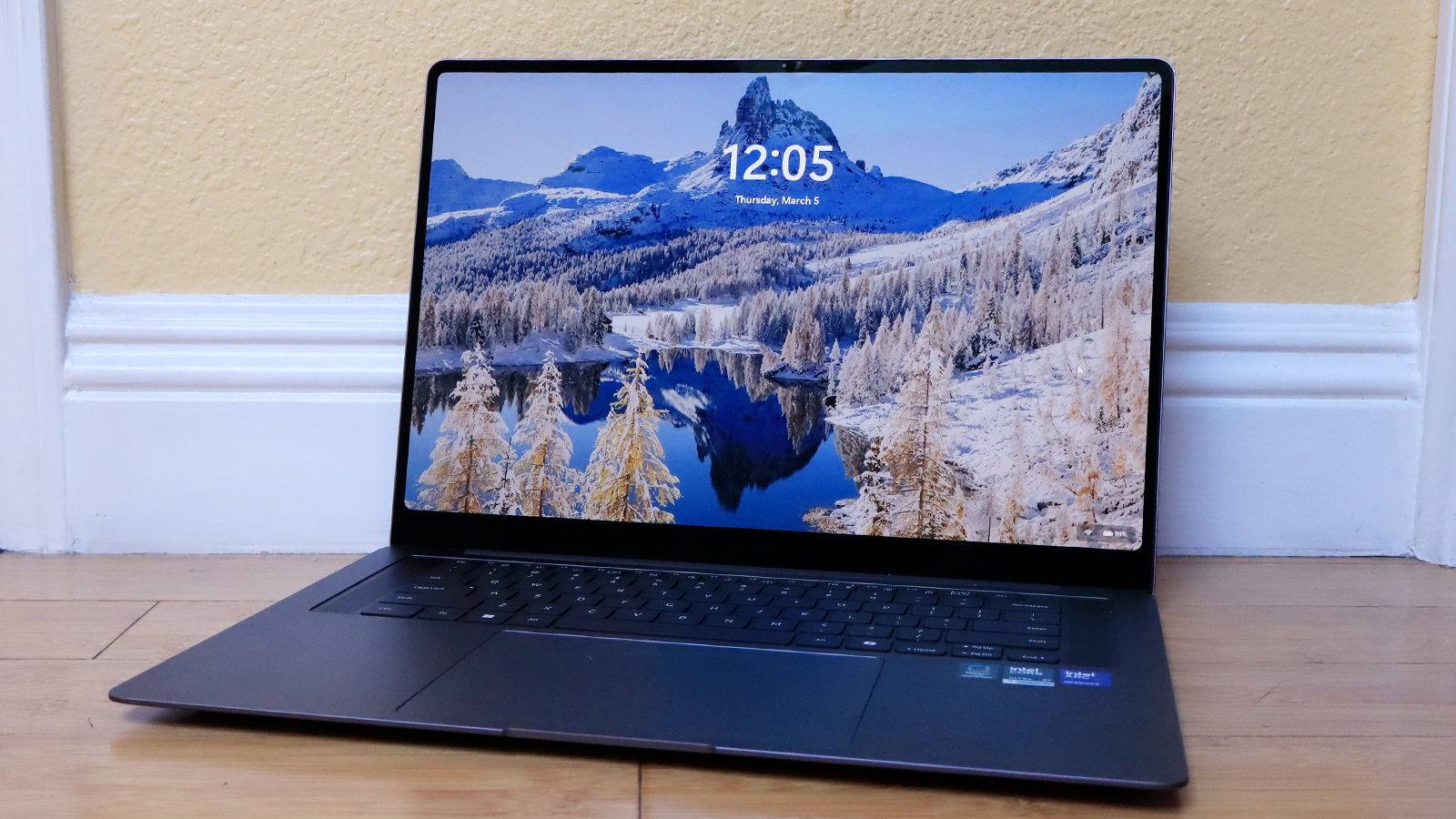
On the screen front, Samsung didn't cheap out entirely. The 16-inch panel is available with or without touch functionality and uses a viewing-angle-stable LTPS display running at 1,920 x 1,200 resolution with brightness up to 350 cd/m², paired with Panther Lake Core Ultra 7 355 or Core Ultra 5 325 chips. If you want to compare notes on higher-end panel tech, the pricier Book6 Pro and Ultra models step up to AMOLED.
Where touchscreen models are offered, the display responds with crisp visuals at a refresh rate of up to 120Hz.
Performance: What's Actually Under the Hood
This is where the Galaxy Book6 gets genuinely interesting. The whole series runs on Intel Core Ultra Series 3 processors the first client system-on-chips built on the Intel 18A manufacturing process, delivering efficiency alongside high-speed CPU, GPU, and NPU performance for smoother, more responsive on-device AI.
Samsung claims up to 60% faster CPU performance compared to the previous generation, with an integrated NPU capable of handling AI tasks at speeds up to 50 TOPS. For the standard Book6 specifically, you're looking at Intel Core Ultra 7 and Ultra 5 chips paired with integrated graphics, up to 32GB of LPDDR5X RAM, and up to 1TB of SSD storage.
That NPU number matters more than it might sound. With an NPU delivering up to 49 TOPS, the Galaxy Book6 supports Copilot+ PC features, letting you run on-device AI tools without leaning on the cloud.
Battery Life and Charging
Battery anxiety is a real reason people avoid switching laptops, so this is worth calling out directly. Samsung rates the Galaxy Book6 for up to 24 hours of battery life, with Super Fast Charging 2.0 getting you back up to speed quickly when you do need to plug in. The battery itself sits around 61.2 Wh, charging at 45W.
Galaxy AI Features Worth Knowing About
The Galaxy Book6 ships with a wide range of Galaxy AI features aimed at streamlining everyday tasks. AI Select lets you highlight anything on screen and use AI Cut Out to remove backgrounds instantly for clean presentation-ready images, translate text on the fly, open a selected website, or kick off an email in your default mail app. There's also natural language search you can describe what you're looking for in plain language, whether that's a specific photo buried in your gallery or a device setting you can't remember how to reach.
If you're already using a Galaxy phone or tablet, features like Link to Windows for reviewing messages and notifications, Multi Control for copy-paste and drag-and-drop between devices, and Second Screen for expanding your workspace all make the Book6 feel like a natural extension of the Samsung ecosystem rather than an isolated PC.
Samsung Galaxy Book6 vs. Dell XPS 16 9640
The Dell XPS 16 9640 is the natural comparison point for anyone shopping the 16-inch Windows laptop category, though it plays in a notably different tier. The XPS 16 launched a generation earlier on Intel's Meteor Lake platform rather than the newer Panther Lake silicon in the Galaxy Book6. Configurations range from the Core Ultra 7 155H up through the 165H, paired with graphics options spanning integrated Intel Arc up to a discrete NVIDIA GeForce RTX 4070.
Display-wise, Dell gives buyers a genuine choice: a 16.3-inch FHD+ non-touch panel at 500 nits, or a 16.3-inch 4K+ OLED touch display hitting 400 nits with 100% DCI-P3 color coverage and Dolby Vision support. That OLED option is a real strength for anyone doing color-sensitive creative work, and reviewers have specifically flagged its 4K OLED panel as a highlight, even while noting the GPU performance is only average for the price.
Connectivity is where the XPS 16 draws real criticism. The laptop offers only three USB-C ports and a card reader, with Thunderbolt 4 support limited to specific configurations a notably sparse port selection for a 16-inch machine with room to spare. Pricing also runs higher: a well-specced XPS 16 9640 configuration lands around $2,499, roughly double the Galaxy Book6's starting price, for a machine with better raw graphics ceiling but a more dated processor generation and worse day-to-day battery efficiency.
Bottom line: choose the Galaxy Book6 for newer silicon, better battery life, and a lower entry price. Choose the Dell XPS 16 9640 if you specifically need the 4K OLED panel or a higher-end discrete GPU for creative rendering work, and don't mind paying a premium for it.
Where the Lenovo ThinkPad P16 Gen 2 Fits In
It's worth mentioning the Lenovo ThinkPad P16 Gen 2 here too, even though it's chasing a different customer entirely. This is a mobile workstation, not a consumer ultraportable; reviewers have called it an absolute beast in 3D rendering, CAD, and AI workloads thanks to top-tier CPU and GPU options, though its weight and thermal limits mean it's built for desk-based professionals rather than travelers. Configurations run from a Core i5 with an entry-level RTX A1000 GPU all the way to a Core i9 paired with RTX 5000 Ada graphics, 192GB of RAM, and 8TB of storage, with pricing that can break past $6,000 at the top end.
If your work genuinely demands ISV-certified workstation graphics and ECC memory, the Lenovo p16 gen 2 is in a different league. For everyone else students, general professionals, everyday multitaskers that kind of power (and price) is overkill, which is exactly the gap the Galaxy Book6 is built to fill.
Pros and Cons
Pros:
-
Newer Intel Core Ultra Series 3 (Panther Lake) processor with meaningful CPU and AI performance gains
-
Rated battery life up to 24 hours
-
Competitive starting price at $1,049.99
-
Deep integration with Galaxy phones, tablets, and watches
-
Copilot+ PC certified with on-device AI features
Cons:
-
Base display resolution (1,920 x 1,200) is modest compared to premium 4K OLED rivals
-
Integrated graphics only on the standard model; no discrete GPU option
-
Storage tops out at 1TB, lower than some competitors
-
AI features work best when paired with other Samsung devices
Frequently Asked Questions
Is the Samsung Galaxy Book6 worth buying? For everyday productivity, web browsing, and light content editing, yes, especially if you already own a Galaxy phone, since features like Multi Control and Second Screen add real convenience. If you need discrete graphics for gaming or heavy creative work, look at the Galaxy Book6 Pro or Ultra instead.
How does the Galaxy Book6 compare to the Galaxy Book6 Pro? The Galaxy Book6 offers reliable performance for everyday productivity editing documents, browsing, and streaming while the Book6 Pro is built for professionals who multitask on the go, delivering stronger all-around performance in a lighter, more portable design.
Does the Galaxy Book6 support Copilot+ PC features? Yes, with the Panther Lake processor and an NPU delivering up to 49 TOPS, the Galaxy Book6 provides faster, smoother on-device AI performance for a comfortable Copilot+ PC experience.
What's the release date and price? The Galaxy Book6 became available across the US starting March 11, 2026, with a starting price of $1,049.99.
Final Verdict
The Samsung Galaxy Book6 doesn't try to be everything to everyone and that's its biggest strength. It's not chasing the Dell XPS 16's OLED brightness or the Lenovo ThinkPad P16 Gen 2's workstation-grade graphics ceiling. Instead, it aims squarely at the everyday user who wants current-generation Intel silicon, genuinely long battery life, and tight ecosystem integration, all without the premium price tag those other machines demand.
If that sounds like your use case, the Galaxy Book6 deserves a real look before you commit to anything else in this price bracket.
Have you used the Galaxy Book6 or considering the switch from an older laptop? Drop a comment below with your questions, share this article with anyone laptop-shopping right now, and let us know which model Book6, XPS 16, or ThinkPad P16 you're leaning toward.







 Search in Photos
 Search in Albums
 Search in Members
 Search in Articles
 Search in Blogs
 Search in Businesses
 Search in Events
 Search in Groups
 Search in Listings
 Search in Music Albums
 Search in Music Songs
 Search in Pages
 Search in Questions
 Search in Quotes
 Search in Recepies
 Search in Thoughts
 Search in Videos
 Search in Wishes
 Search in Prayers